Virginia Problem Gambling and Marijuana Prevention Community Readiness Assessment
Project Objectives
- Measure community readiness across Virginia to establish a baseline understanding of how prepared communities are to address problem gambling and marijuana use prevention in the wake of recent and rapidly changing state laws
- Surface gaps in community knowledge, leadership engagement, and available resources related to both issues, with attention to the distinct challenges each presents given their different legal and cultural contexts
- Identify variation in readiness across communities, including differences between those with dedicated gaming and gambling establishments and those without, to inform where and how prevention efforts should be targeted
- Generate actionable recommendations that Community Service Boards can use to advance prevention work at the local level, matched to each community's current stage of readiness
- Understand the role of community climate and public perception in shaping willingness to engage in prevention, including the widespread tendency to view both gambling and marijuana use as individual choices rather than community-level concerns
- Capture the voices of diverse stakeholders, including industry representatives, local leaders, service providers, and community members, to build a multidimensional picture of readiness across the Commonwealth
Project Description
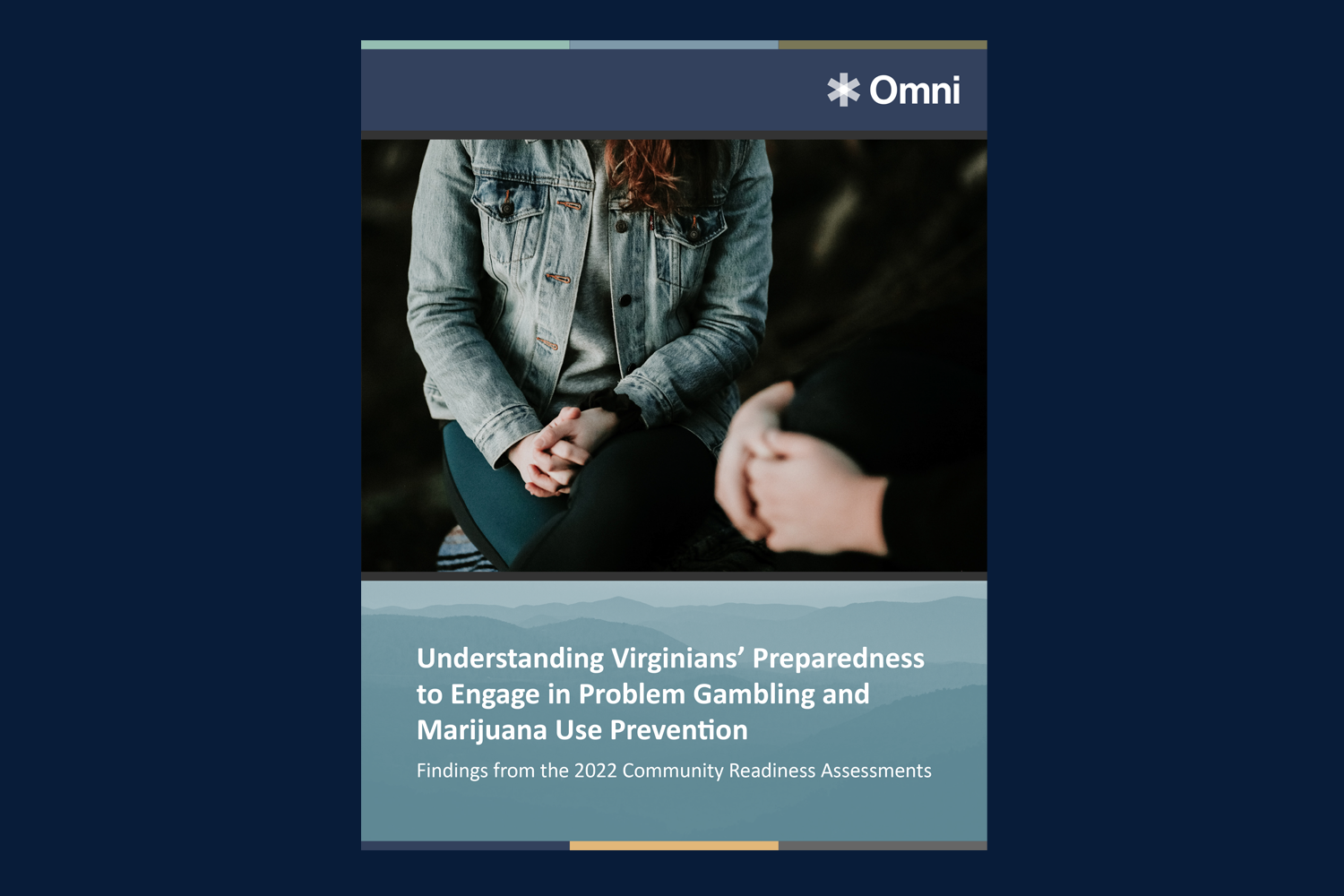
Omni partnered with the Virginia Office of Behavioral Health & Wellness (OBHW) within the Department of Behavioral Health and Developmental Services (DBHDS) to support the Commonwealth's first systematic effort to understand community readiness to address problem gambling and marijuana use prevention. This work was part of a longer-term evaluation and capacity-building contract through which Omni supports OBHW's prevention block grant activities. As Virginia navigated a rapidly shifting legal environment — with the legalization of sports betting, casinos, and recreational marijuana all occurring in close succession — OBHW and Omni recognized the need to understand not just what was changing, but whether communities were prepared to respond.
Omni designed the Community Readiness Assessment process, adapted the Tri-Ethnic Center's Community Readiness Model for the Virginia context, and provided technical assistance and training to Community Service Boards (CSBs) across the Commonwealth to support local implementation. CSBs conducted stakeholder interviews and focus groups in their catchment areas, engaging community members, local leaders, industry representatives, service providers, and others with direct knowledge of the gambling and marijuana environments in their communities. Omni guided CSBs through the scoring and interpretation process, helping translate qualitative stakeholder input into structured readiness ratings across five domains: community knowledge of efforts, leadership, community climate, community knowledge about the issue, and available resources.
Once CSBs completed data collection, Omni synthesized findings across all regions, identified patterns and variation, and developed the statewide report. That analysis drew on both quantitative readiness scores and rich qualitative themes from stakeholder interviews, allowing Omni to produce a nuanced picture of where Virginia communities stood, what was driving low readiness, and what would need to shift for prevention efforts to gain traction. The report also included a spotlight analysis examining how readiness differed in communities with existing or planned gambling establishments, as well as practical next-step recommendations tailored to each issue area.
Throughout the engagement, Omni worked closely with OBHW to ensure the process was feasible for CSBs operating under significant capacity constraints, many of whom were still managing COVID-19 response work. Omni documented successes and challenges from the implementation process and developed a set of learnings to strengthen future needs assessment efforts across the state.
A readiness score in the low twos tells you something important: communities aren't in denial, they just haven't been given a reason to act yet. That's exactly where prevention needs to start.


Ready to get started?
Connect with us today by scheduling a discovery session with a member of our team.
