Year Six Virginia Peer Recovery Specialist Training Evaluation
Project Objectives
- Strengthen Virginia's peer recovery workforce by building a rigorous, longitudinal evaluation system that tracks training quality, trainer effectiveness, and trainee preparedness across the full Peer Recovery Specialist (PRS) certification pathway.
- Close a critical infrastructure gap by designing and deploying a comprehensive portal that centralized trainer rosters, training schedules, applications, certificates, evaluation forms, and resources where none existed before.
- Ensure continuous program improvement by delivering annual analysis of trainee evaluation data to DBHDS, giving decision-makers the evidence they need to refine how PRS trainings are structured and delivered.
- Expand the reach and rigor of peer support training by building out portal features and evaluation instruments to accommodate new Endorsement Trainings targeting specialized populations, including older adults, justice-involved individuals, and those in crisis services.
- Surface the trainee voice at scale by designing evaluation instruments that captured both quantitative ratings and open-ended qualitative feedback from over 1,200 participants annually, protecting privacy while enabling trainer-level reporting.
Project Description
Omni has partnered with the Virginia Department of Behavioral Health and Developmental Services Office of Mental Health, Wellness, and Recovery Supports for six years to evaluate and strengthen the state's Peer Recovery Specialist training program. What began as an evaluation engagement quickly revealed a foundational challenge: DBHDS had no reliable system for tracking trainings, trainers, or trainees. There was no clear way for prospective students to find or sign up for a training, no centralized place for trainers to access resources, and no mechanism to issue or store completion certificates. Before evaluation could be meaningful, the infrastructure to support it had to be built.
Omni responded by designing and launching the VAPRS portal: a purpose-built platform that brought order and accessibility to the entire PRS training ecosystem. The portal houses the roster of DBHDS-certified trainers, training schedules and applications, downloadable certificates for graduates, evaluation forms, and resources for both trainers and students. What started as a foundational tracking tool has grown over six years into a robust system, updated iteratively to reflect new program needs; including the addition of Endorsement Training tracks for specialized populations such as Certified Older Adults Peer Specialists, Integrated-Forensic Peer Recovery Specialists, and Peer Support in Crisis Services.
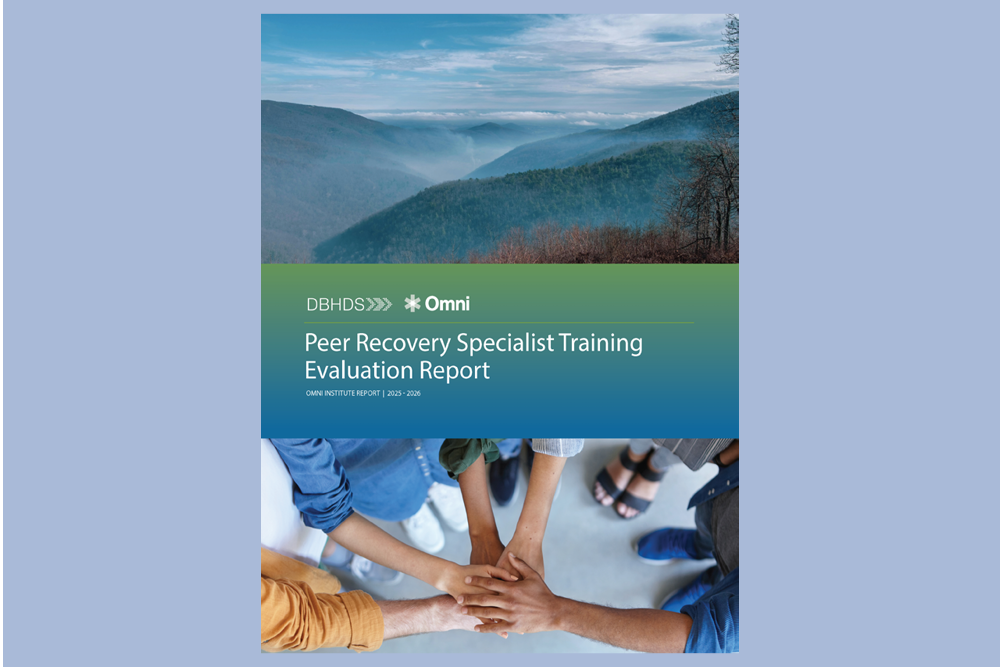
Alongside the portal, Omni developed the evaluation instruments used to assess both the 72-hour PRS training and the Endorsement Trainings. These tools were designed to capture structured ratings across training content, trainer effectiveness, training structure, modality, and overall experience; as well as open-ended responses that surface the trainee perspective in their own words. Each year, Omni conducts a full analysis of all collected evaluation data and delivers findings to DBHDS, providing an evidence base the agency uses to understand program performance, identify areas for improvement, and make informed decisions about how trainings are run. The report submitted here reflects evaluation data from 1,244 participants across 157 trainings for the 72-hour program, and 28 participants across 9 Endorsement Training sessions, all from the February 2025 through January 2026 evaluation period.
In April 2026, the DBHDS team integrated the VAPRS portal and PRS training evaluation into their internal processes, institutionalizing crucial PRS work. The Omni team is grateful for the opportunity to support them as they built long-lasting systems that will support peers and their trainers into the future.
Our job across 6 years has been to make sure the feedback loop driving quality is rigorous and systematic, and this body of work shows what's possible when evaluation is built into a program from the ground up.




Ready to get started?
Connect with us today by scheduling a discovery session with a member of our team.
