What a Crisis in the Colorado Backcountry Has to Teach Us About Public Health (and Leadership)
Published
September 25, 2026

crisis-colorado-backcountry-public-health-leadership
Public health runs on data. Rates, trends, disparities, outcomes: the numbers that tell us where a community is struggling and where it needs support. But data describes a crisis from the outside. It tells you what happened. It rarely tells you what it felt like to be inside it, who had the knowledge and who had the authority, and what those affected went through. For that, you need a story.
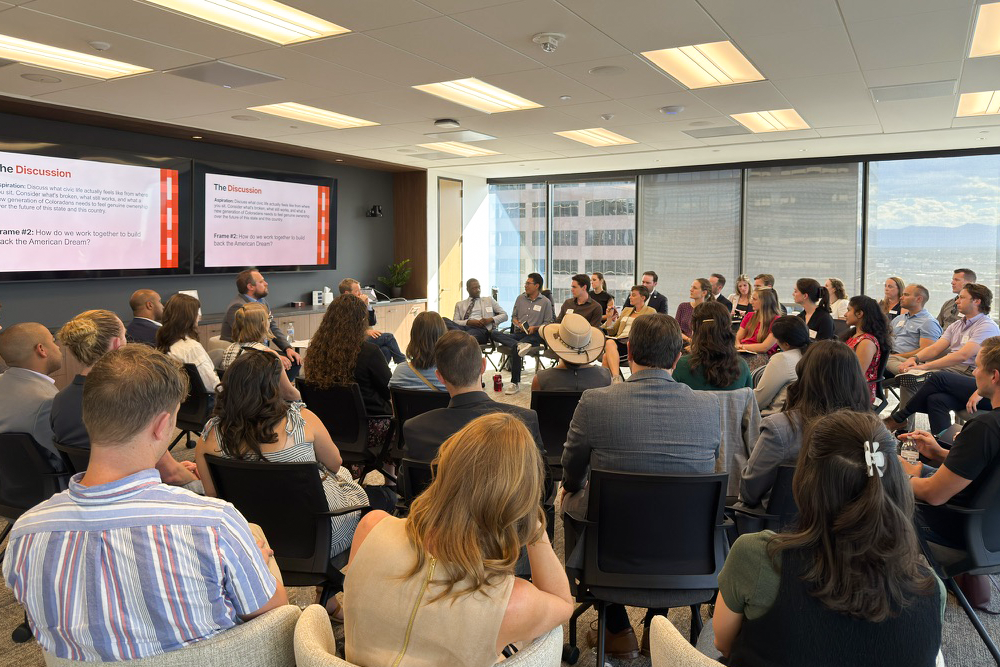
Devon O'Neil is a journalist based in Breckenridge, Colorado, and the author of The Way Out: A True Story of Survival in the Heart of the Rockies. Devon joined us earlier this week at the Public Health in the Rockies Conference for a Purpose Hour-style event. The invitation wasn't obvious on the surface. His book isn't about public health, and it isn’t about leadership either.
The book chronicles a 2017 backcountry ski trip that started as a family adventure weekend and became something no one could have prepared for, ultimately ending with the devastating loss of Brett Beasley, a Salida-based father, U.S. Forest Service Ranger, and outdoor enthusiast.
On the first morning of the trip, Brett and Cole, the 15-year-old son of a friend, set out for a brief powder run before the rest of the group was ready. Brett was the expert: a Forest Service ranger who knew those mountains as well as anyone. Expecting a short outing, he traveled light and left his survival pack and phone at the hut. A severe storm soon moved in, and in the whiteout that followed, the two lost their way back.
Two searches began, each guided by sound instincts. The expert volunteer Search and Rescue team planned its response around a reasonable assumption: that a ranger of Brett's experience would be well prepared. At the same time, friends and neighbors went into the storm themselves, carrying a different kind of knowledge: an intimate familiarity with the terrain and with how Brett would respond in a crisis. Each group held part of the picture, and neither held all of it. Thirty hours later, only Cole came home.
The audience questions after the talk were brilliant, making clear, explicit connections to their public health work.
These aren't questions with clean answers, but they are questions that matter.
Devon sat with this story for years, waiting for those who lived it to be willing to speak and piecing together enough information to feel solid in the reporting. His journey gives him clarity on one of the book's main themes: the expert's role in a crisis only goes so far.
That is the real lesson, and it runs straight through public health and civic leadership. In our hardest challenges, the people with authority who are considered the experts and say they have the answers are still working from an incomplete picture. Progress doesn't come from finding the one person who has it all figured out. It comes from building enough trust across different perspectives that people can actually share what they know when it matters most.
That is hard to do when the heat is high. It's why preparation matters, and why relationships matter before the crisis, not just during it. It's why practice matters: creating the conditions, in calm moments, for the kind of honest communication that becomes almost impossible once everything is on fire.
The work of public health, like the work of civic leadership, is about managing complex, rapidly moving parts across a large number of individuals with different perspectives and priorities. There is no single expert who has the full picture. There is no single authority that can solve it alone. The communities that are living these challenges are already making progress to move forward, and already carrying things institutions haven't fully seen.
Our work is not to arrive with the answers. It is to show up prepared, build the relationships before we need them, and communicate across the gaps. Even (especially!) when the storm has already moved in.
P.S. I highly recommend The Way Out. It’s a quick and impactful read.
Get updates on our research findings, projects, and the latest in evidence-based news to improve lives, build better systems, and drive social change.