CiviCO Pop-Up: A Conversation with Senator Michael Bennet
Published
September 14, 2026
civico-pop-up
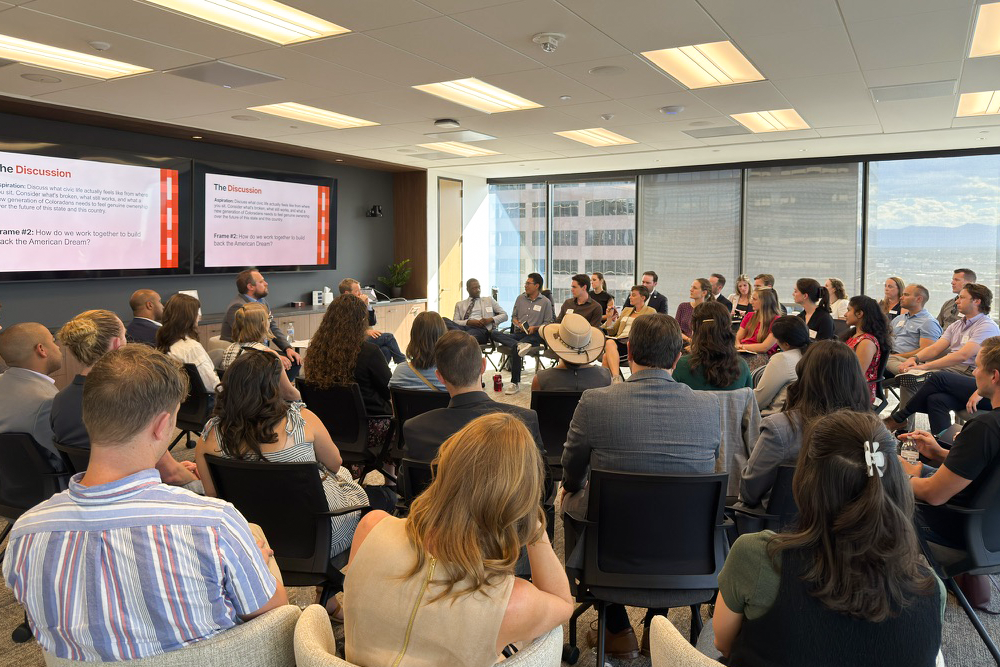
Recently, we had the opportunity to host Senator Michael Bennet for a discussion with the future leaders of Colorado to discuss how to "rebuild the civic culture of America." While it can be difficult to find optimism these days in our polarized world of extreme online partisan rhetoric, this discussion with the Senator felt like something different. I walked away with a sense of hope that we can come out of this current situation and chart a better path.

50 young leaders, all under the age of 40, joined us to share their perspectives with the Senator. The hour-long conversation covered too much ground to recap fully, but a few aspects of the discussion caught my attention in particular.
First, this was a different kind of political conversation, one where the politician mostly listened. This was about the audience talking. Sharing their hopes, fears, and frustrations about the current moment and talking to the Senator, and to each other, about where we are heading and what is demanded of us right now. It wasn't all doom and gloom or pie in the sky optimism. It felt like real people grappling with understanding their own role in the community, how to sift through the unending stream of "crisis issues" to focus on where they can have impact, and a room full of people having a conversation that built off of each other, sometimes disagreeing, but always moving the conversation forward.
Second, it became abundantly clear how our online culture is in direct conflict with the world we actually want to live in. Participants talked about how everything online is the most important thing ever, about the nonstop firehose of information and crisis, about the extreme rhetoric and polarization. And about the disconnect from local community that the comes from an online existence that nationalizes, or globalizes, every issue. But, at the same time, this was a group of people who showed up in-person for this discussion. They talked about wanting to be in community with each other and that they recognized the importance of local issues and starting first in their own communities. And there was a palpable sense in the room of people desperately wanting to continue coming together, having in-person conversation, and breaking down artificial internet boundaries to work on something more tangible in the real world.
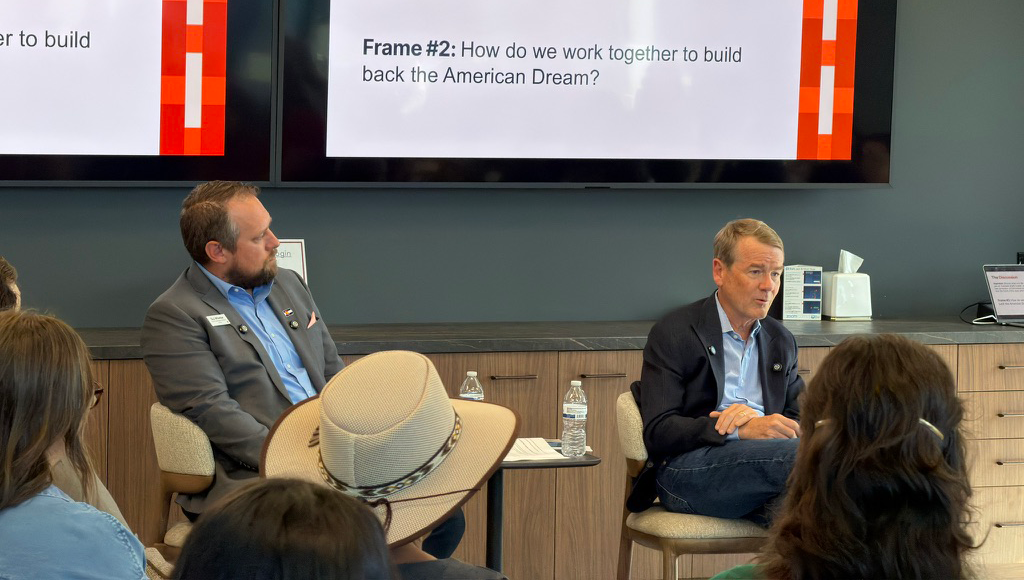
And finally, I was struck by a young generation in the room that is saddled with the decisions of older generations, facing real existential fears about the climate, the economy, and their own individual security. They were wrestling with issues like how to create space to engage in public life, when your personal life can feel so precarious and uncertain. And yet, they were here. They were talking with each other. They stayed after to continue conversations. They asked us to host more of these forums. And they talked about how their generations know they need to step up, lead, and fix this situation that wasn't of their making. They are mired in the seeming insurmountability of it, yet , they are approaching it with a real clear-headed sense that this is serious and daunting yet challenges are meant to be overcome.
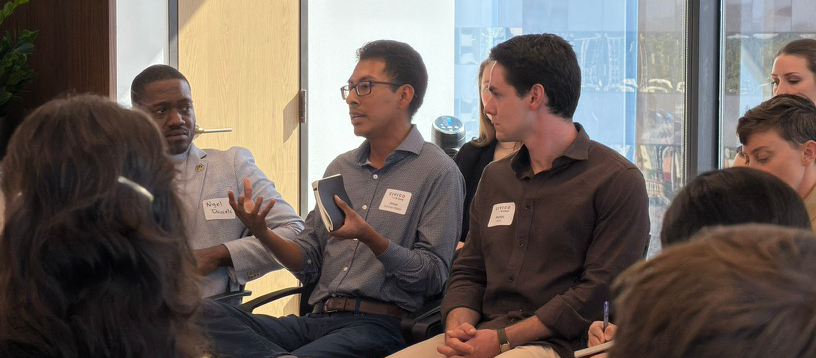
Thank you to Senator Bennet for reaching out to our team to convene this conversation with our community. Thank you also to our partners at the Boettcher Foundation for hosting the space and inviting many from their community of scholars. I am grateful that I had the opportunity to eavesdrop on this conversation. The current moment can feel dark, but the future is bright if we continue to have these kinds of conversations, human-to-human, and find common understanding in real life that inspires local civic action.
Get updates on our research findings, projects, and the latest in evidence-based news to improve lives, build better systems, and drive social change.
