The Value and Fragility of Trust: Reflections from the Minnesota Evaluation Association’s 2026 Unconference
Published
October 23, 2026

minnesota-evaluation-associations-2026-unconference
Earlier this month, I attended the Minnesota Evaluation Association’s 2026 Unconference, Evaluation and Collective Care. The room brought together evaluators, researchers, nonprofit leaders, public-sector staff, and community partners.
Instead of most of us sitting while a few people spoke, we built the agenda together, one conversation at a time. After a tough year for Minnesotans, the day invited us to practice collective care through how we gathered, listened, moved, and made meaning together.
An unconference is an Open Space Technology, a facilitation method in which participants set the agenda themselves. The format grew out of a familiar observation about traditional conferences: the coffee breaks are often the best part. Conference coffee breaks are where people talk about what is really on their minds and work through pressing problems. An unconference is one long coffee break without the formal sessions.
Everyone arrives with a shared call. This year, MNEA framed the call as a question. MNEA’s event description set the scene:
At a time when our community can experience sudden social disruptions and demands, evaluators must navigate new and heightened uncertainty, inequity, institutional strain, and questions of trust. We have an important role to play in nurturing learning, accountability, and community voice.
The question that followed:
Knowing it is up to us, what are the conversations and care required of evaluators in this moment that will move us toward a more just and sustainable future that is grounded in MNEA values: Equity and Justice, Critical Reflection, Person-Centered, Accountability, Community Relationships, and Accessible Knowledge?
The day opened with a marketplace where questions and conversation topics were called. Callers (that is, anyone with a conversation topic they wanted to hold) announced their topics and where they would meet, and everyone else chose where to go.
From there, participants were asked to follow the law of mobility: if you are neither learning nor contributing, move somewhere you will. The law of mobility invites us to protect our own time and energy and to trust that the people we leave will carry on without us.
Beyond the law of mobility, four other principles ground the process:
Across the day, I kept returning to the idea of trust within our work as evaluators and changemakers. My answer to the calling question for now is to treat relationships and trust as both the process and the product of our work. Trust is how good evaluation happens, and it is an outcome worth building for the common good.
People share their experiences with evaluators when they believe the information will be used for good. The common good depends on trust at several levels: individuals and families trust that their data will be used for their benefit, grant stewards trust that community partners are putting funds to good use, and taxpayers trust that government systems will deliver what they promise. Evaluators work within each of these systems and have felt the strain of weakening trust.
Trust requires relationships that are intentional, ongoing, and reciprocal. Many Minnesotans have witnessed and taken part in a great deal of mutual aid this year. That experience shows that the people best able to help in a crisis were those who had already built relationships with their neighbors. We need these relationships to respond in a crisis, so we have to build them now, before we need them.
Building that trust is not trivial. Communities that have been studied, counted, and then left without results or action have learned to be cautious about where they spend their time and energy. That caution is a reasonable response to a process that did not treat trust or relationships as part of the work.
Many of the systems we work in run on checkboxes: quarterly surveys, required performance measures, and annual reports. Some support trust by building understanding or establishing credibility. Others work only as an accountability mechanism and do little to build relationships.
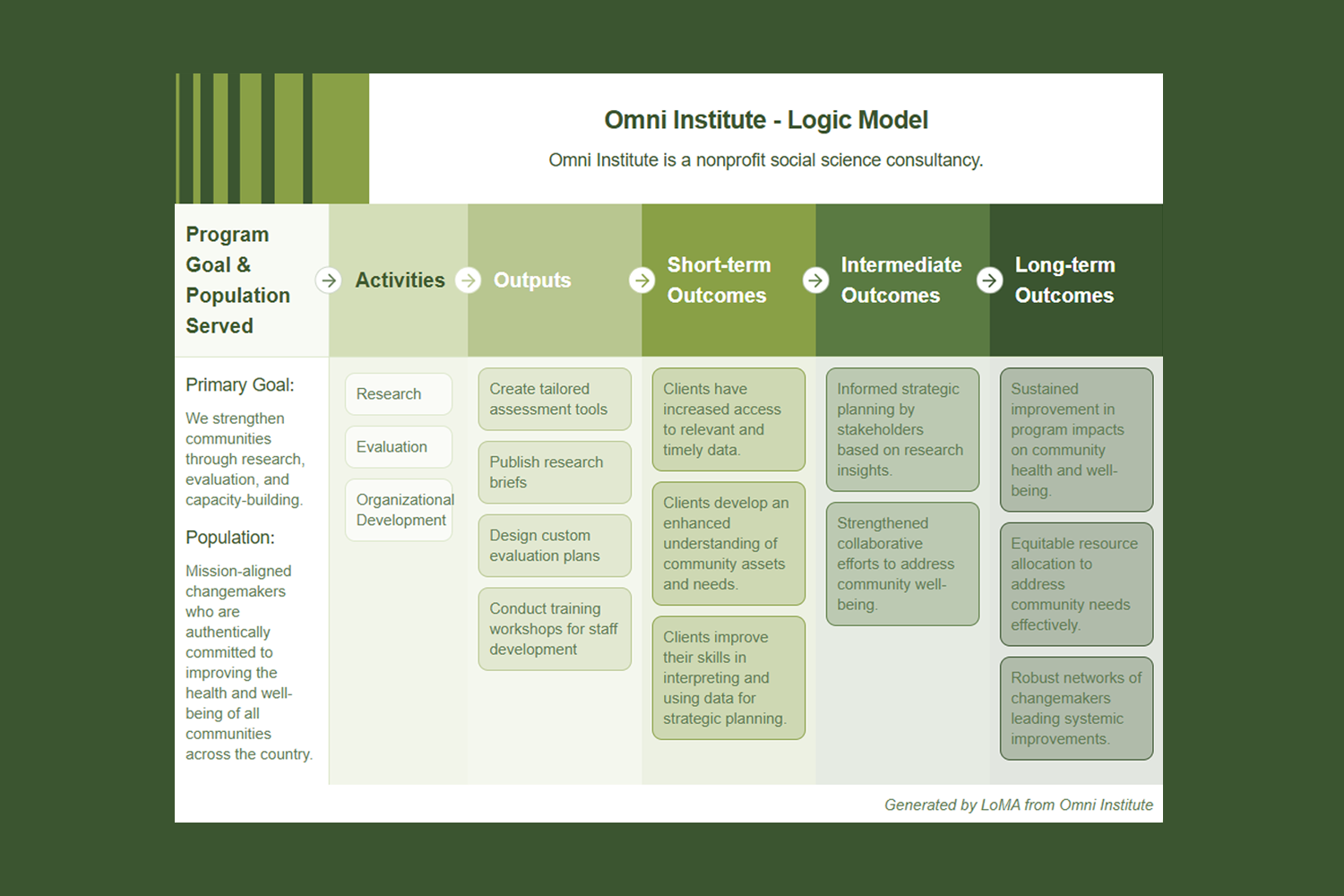
At Omni, we are serious about our application of Equity, diversity, and inclusion (EDI) principles in evaluation because they are one place trust gets built. For example:
I plan to keep an eye out for other places where trust is the facilitating driver behind social change so that we can learn from it, and build on it in our work with our partners, communities, and clients.
Some Open Space Resources:
Get updates on our research findings, projects, and the latest in evidence-based news to improve lives, build better systems, and drive social change.