Upstream of 40 Million People
Published
November 23, 2026
upstream-40-million-people
There’s an old line about the West that usually gets pinned on Mark Twain. “Whiskey is for drinking. Water is for fighting over.”
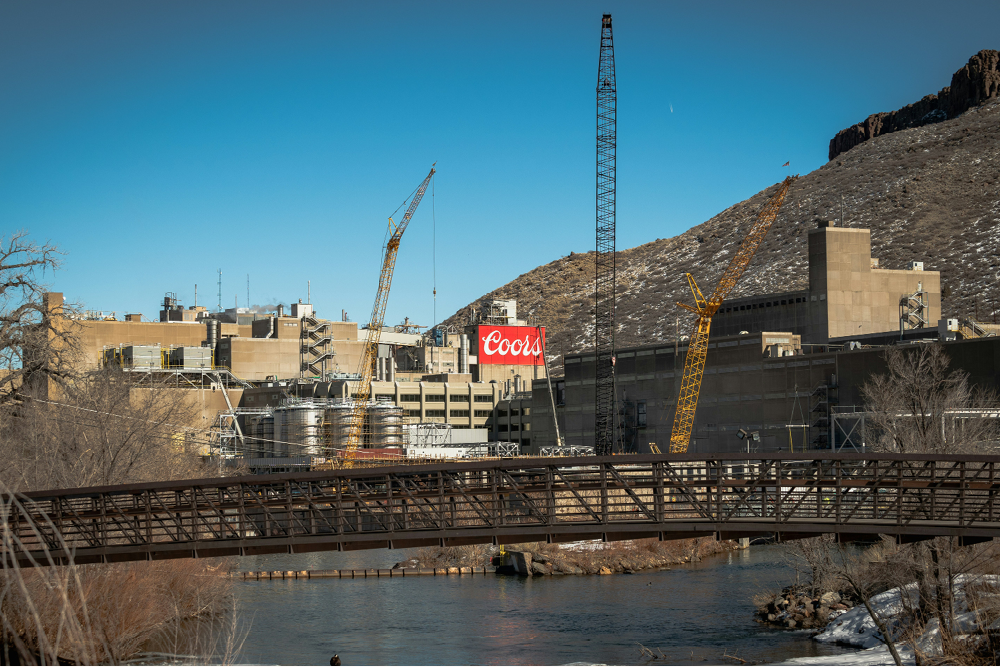
There’s no record he ever said it, but standing inside the Coors Brewery in Golden last week, it felt true enough. We were in a brewery, so swap whiskey for beer and the second half still holds.
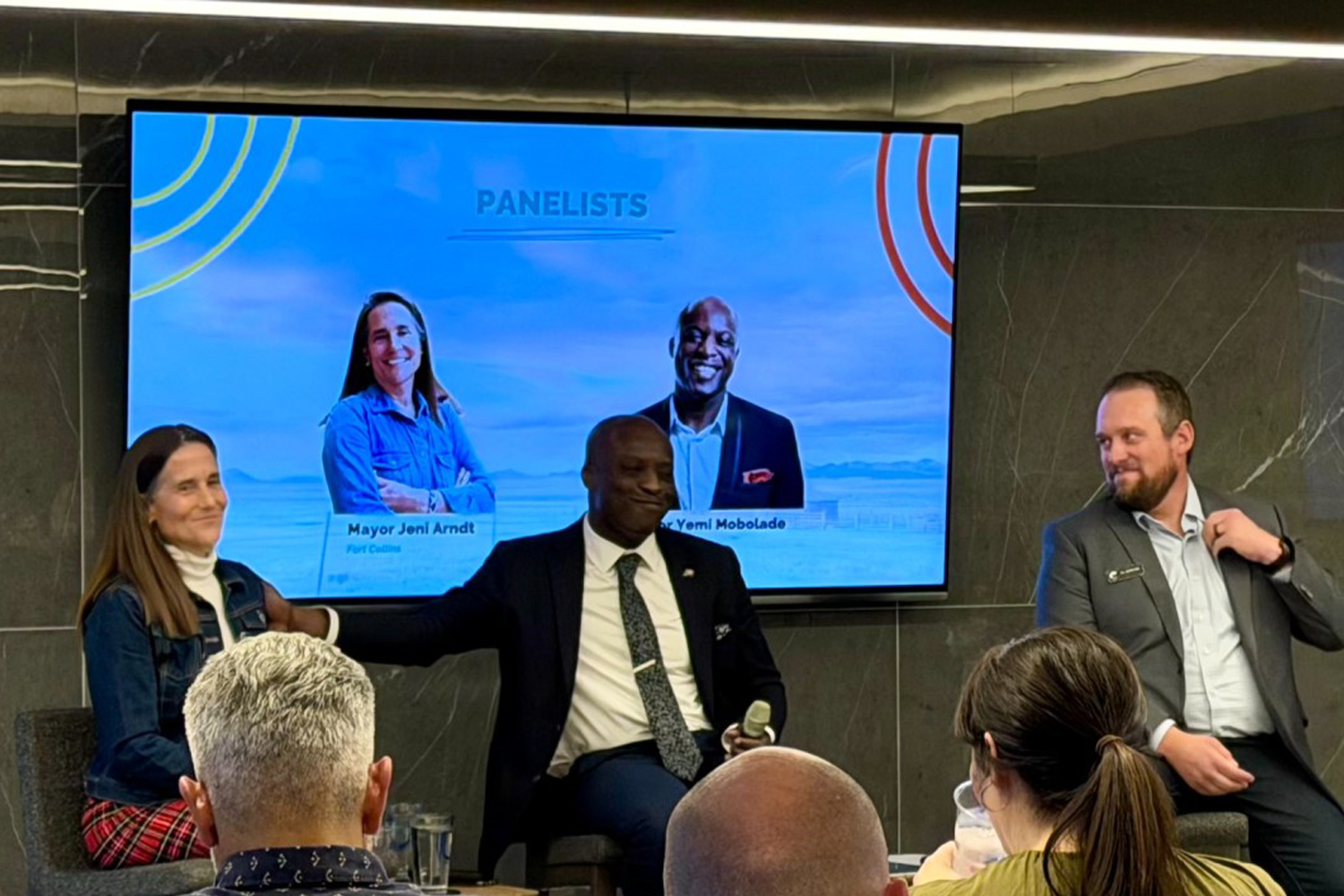
Our November Purpose Hour, Cheers to Colorado Water: What Flows Downstream, brought together leaders from across sectors to wrestle with what may be the defining civic challenge of Colorado’s next generation. A huge thank you to Molson Coors for hosting us, and especially to Lacey Golonka, Community Affairs Manager at the Golden brewery, who opened the doors and leaned into this partnership with us from the start. Coors Banquet has been brewed with Rocky Mountain water since 1873. Few organizations in this state have more at stake in how we answer the water question.
We learned from two people who live this work every day.
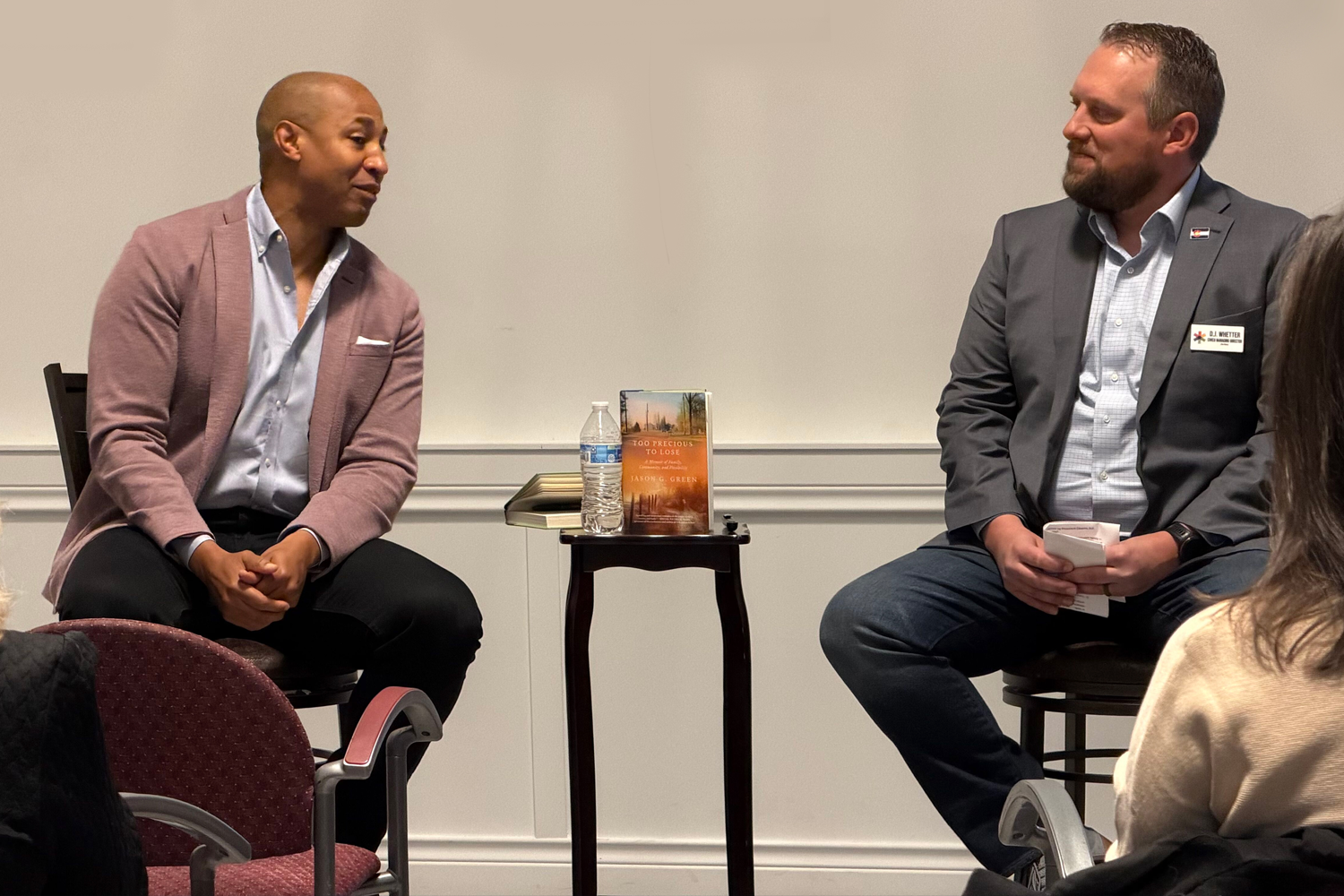
James Eklund, a partner at Taft Stettinius & Hollister, has spent his career at the center of Colorado River law and policy. He’s been a favorite of our Governors Fellows for years, and for good reason. He can make the Law of the River feel urgent, human, and occasionally hilarious.
Neal Santangelo is Senior Manager of Water Resources at Molson Coors. He’s a Colorado native and a civil engineer who runs the company’s Clear Creek water operations. Neal walked us through the stream reclamation work Coors has invested in, from Clear Creek cleanups in Golden, the creek its brewery depends on, among other projects.
The full recording of the event is in our Content Library on Impact Forum or on YouTube. I strongly suggest you give it a listen.
I left with three takeaways I can’t shake.
Colorado is a headwaters state. The snow that falls on our peaks becomes the Colorado, the Rio Grande, the Arkansas, and the Platte. It flows to farms, cities, indigenous communities, and economies far beyond our borders, and all the way into Mexico.
The Colorado River alone serves roughly 40 million people. Under the 1922 Compact and the 1944 treaty, the system is carved up on paper: 7.5 million acre-feet for the Upper Basin, 7.5 for the Lower Basin, 1.5 for Mexico. It underwrites food that ends up on tables across the country.
Wallace Stegner wrote that “aridity, and aridity alone, makes the various Wests one.” Our water binds us to neighbors we will never meet. When we talk about water in Colorado, we are never only talking about Colorado.
James pushed that even further. Water is quickly becoming the growth constraint of the arid West. One slide put it bluntly: water is the new zoning code. Housing, data centers, semiconductor plants, advanced manufacturing, and agriculture are all drawing from the same shrinking account.
Eric Kuhn, the former general manager of the Colorado River District, has argued we need to break the myth “that economic prosperity requires a higher consumptive use.” That may be one of the most important civic conversations Colorado isn’t yet having out loud.
Colorado water law runs on prior appropriation. First in time, first in right. Those who hold senior water rights reasonably point to them as the foundation for how water should keep moving. That isn’t bad faith. It’s the system working as designed.
But the system was designed around numbers that may not hold into the future. They certainly didn’t hold last year.
The Basin saw the lowest snowpack on record and record March heat. Lake Powell and Lake Mead both hit record lows in August. The seven Basin states could not reach agreement, so the federal government stepped in with two years of operating guidelines. Within days, Nevada sued. California’s commissioner, JB Hamby, called the federal plan “a bridge, not a permanent solution.”
James named the stalemate plainly. The Upper Basin is reluctant to cut use and wants to protect allocations it hasn’t yet developed. The Lower Basin faces acute shortages on a system that was over-promised from the start. Both positions make sense from where each side stands. That’s exactly why this is so hard.
In the language of how we talk about leadership, this is not a technical problem. It is an adaptive challenge, maybe the most adaptive challenge Colorado faces. Martín Carcasson would call it a wicked problem: rooted in competing values, where tradeoffs are unavoidable. Agricultural heritage. Growing cities. Healthy rivers. Tribal sovereignty. A business community that needs certainty. Every one of those values is legitimate. They can’t all be fully honored at once.
Here’s the good news, and it matters. Colorado largely managed a brutal year.
On October 12, Denver Water’s system sat at 67 percent full against a historical average of 90. Dillon was at 62 percent against an average of 94. And yet the taps ran. The brewery brewed. That happened because water managers planned ahead, adjusted quickly, and leaned on storage that earlier generations had the foresight to build.
Then the weather whipsawed. October storms sent floodwater down the Animas, the San Juan, and the Mancos. Lake Powell rose about 21 feet in a matter of weeks. It was welcome water, but it was volatility, not relief. As of November 1, the Colorado River system was still only about a third full, and Powell sat at 26 percent.
Storage is a savings account. One bad year, we can draw it down and survive. But the Basin has lived through roughly two decades of aridification. Two or three bad years back to back would not be a tougher version of 2026. It would be a different world, with different conversations, different tradeoffs, and far less room for error.
Benjamin Franklin put it simply in 1746: “When the well’s dry, we know the worth of water.” Our challenge is to learn the worth of water before the well runs dry.
I don’t think it asks us to become water lawyers. I think it asks us to practice the kind of civic leadership this challenge demands.
It starts with curiosity. Real curiosity about the people upstream and downstream from us, especially the ones whose interests compete with ours. But curiosity needs somewhere to live, and right now Colorado doesn’t have enough of those places. We need bridging spaces where ranchers, brewers, utilities, tribes, developers, and our Lower Basin neighbors can work through tradeoffs instead of litigating them. Spaces where we adjust as the hydrology changes, stay in relationship when it gets hard, and take responsibility for solutions, not just for naming the crisis.
That’s one of the reasons we continue to create spaces like Purpose Hour. Not to solve water in a couple of hours, but to practice staying in the room with a hard question long enough to make progress. Every decision we make about water in Colorado flows somewhere.
If you want to keep practicing, join us at our next Leadership Intersection with Dr. Rod Smith, Our Part of the Mess. In person on December 1, virtual on December 2. Sign-up here: https://impactforum.omni.org/events.
Get updates on our research findings, projects, and the latest in evidence-based news to improve lives, build better systems, and drive social change.